
Blocked gutters rarely become a serious problem overnight. More often, the warning signs build gradually until water starts overflowing, walls become stained, or damp begins to appear around the property. Spotting those signs early can help homeowners deal with the issue before it turns into a bigger repair bill. Recent UK guidance consistently highlights the same core warning signs: overflowing water, visible debris, sagging sections, wall staining, standing water near the property and even vegetation growing in the guttering.
If you are wondering whether your gutters need attention, these are the clearest things to look out for.
1. Water Is Overflowing During Rain
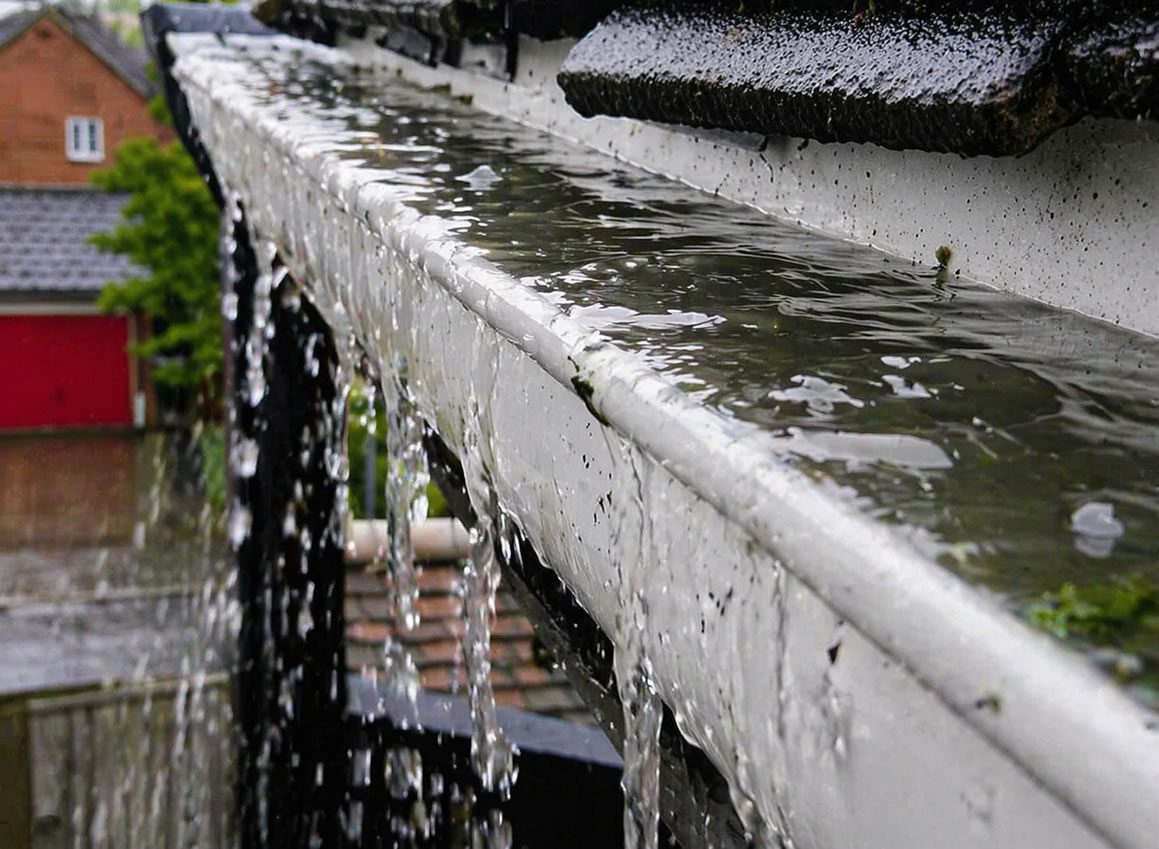
This is one of the most obvious warning signs. Gutters are supposed to carry rainwater safely to the downpipes. If water is spilling over the front or sides during rainfall, something is usually stopping that flow. Recent UK sources repeatedly identify overflow during rain as a strong sign of blockage, often caused by leaves, moss, debris or a restricted outlet to the downpipe.
Overflowing water matters because it can soak exterior walls, splash around windows and doors, and create puddles on paths below. Over time, that can contribute to staining, damp and avoidable wear to the roofline.
2. You Can See Leaves, Moss or Debris in the Gutters
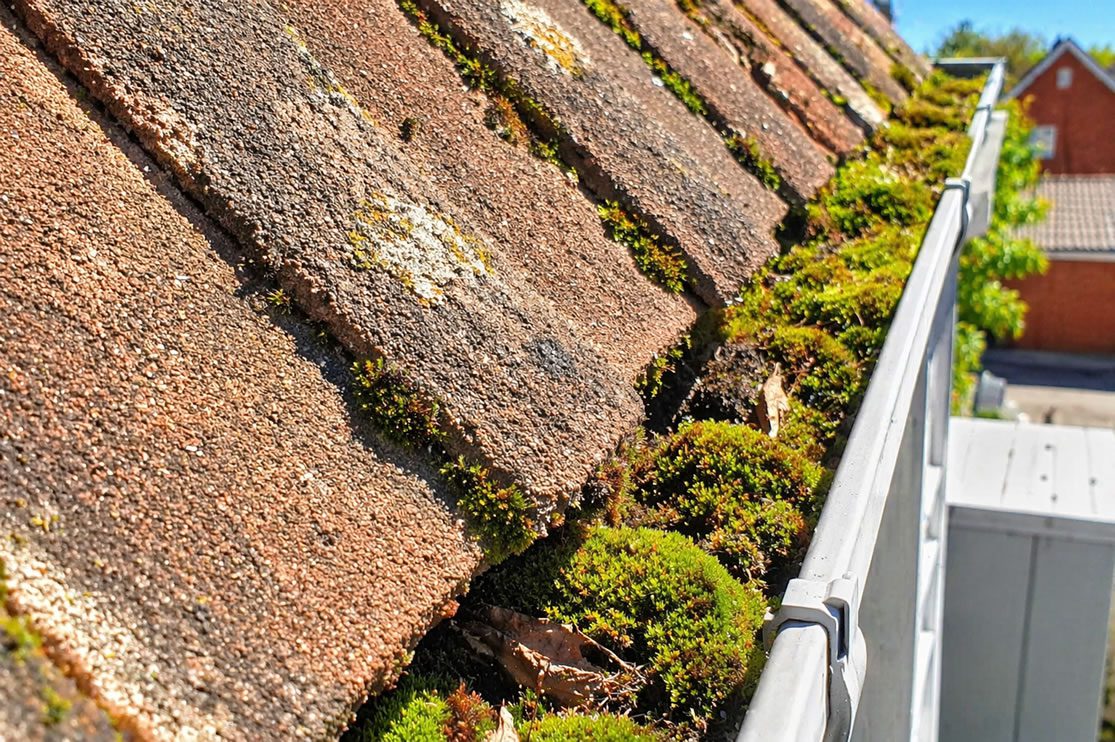
Sometimes the easiest sign is simply looking up and seeing that the gutters are visibly full. If you can spot leaves, roof moss, twigs, silt or other debris from ground level, there is a good chance the gutters are no longer draining properly. Visible standing debris is highlighted in current UK advice as a common sign that cleaning is overdue.
This is especially common on homes near trees or on properties where moss regularly washes down from the roof. In those cases, blockages can build up surprisingly quickly.
3. Plants or Grass Are Growing Out of the Guttering
If plants are growing in your gutters, the problem has been there for a while. Seeds can settle in trapped debris, then start growing once enough moisture and dirt collect in the gutter channel. Both older and newer gutter-cleaning guides point to vegetation growth as a classic sign of long-term neglect.
At that stage, the blockage is usually well established, and water flow is likely already compromised. That makes a proper clean far more urgent than a routine seasonal tidy-up.
4. The Gutters Are Sagging or Pulling Away
Gutters should not dip, bow or hang away from the fascia. Sagging often means they are carrying too much weight, usually from waterlogged debris or long-term blockages. Current UK sources note that a dip or bend in the gutter run is often a sign that the system is under strain and that brackets or joints may start failing as a result.
If left too long, that extra weight can lead to leaks, misalignment or sections pulling loose altogether. Cleaning the gutters early may help prevent that from getting worse.
5. Water Is Running Down Exterior Walls
If you notice dirty streaks, water trails or damp-looking patches on the outside walls, your guttering may be overflowing or leaking. SPAB guidance notes that signs of rainwater penetration often appear as dark patches after rain, especially near gutters and downpipes, while the NRLA notes that green staining on exterior walls often signals water escaping from guttering.
This is one of the more important signs because it suggests the water is no longer being controlled properly. Instead of being sent safely into the drainage system, it is running across parts of the building that should remain dry.
6. Downpipes Are Draining Slowly or Are Completely Blocked
Sometimes the gutter itself looks manageable, but the real blockage is in the downpipe. If rainwater is backing up, trickling slowly or not draining away at all, the downpipe may be clogged. Recent UK gutter-cleaning advice explains that overflow often happens because the outlet to the downpipe is restricted or the downpipe itself is blocked.
A blocked downpipe can make the whole system fail, even if only one part of the gutter is obstructed. That is why clearing gutters properly often includes checking where the water is supposed to go next.
7. There Are Damp Patches or Mould Problems Indoors
Gutter problems do not always stay outside. If rainwater repeatedly overflows near vulnerable parts of the building, it can contribute to damp-related problems indoors. The Housing Ombudsman has dealt with cases involving water overflowing from the roof alongside damp and mould, and SPAB guidance links rainwater penetration to damp symptoms in buildings.
This does not mean every indoor damp problem is caused by blocked gutters, but when exterior overflow and damp appear together, the guttering is worth checking quickly.
8. Water Is Pooling Around the Base of the House
Gutters are designed to move water away from the property. If you keep seeing puddles, splashback or saturated ground near walls and entrances after rain, blocked guttering or downpipes may be part of the cause. Recent guidance notes that standing water near the foundation is one of the warning signs of poor gutter performance.
This is worth paying attention to because repeated pooling can affect paths, patios and ground-level drainage, and it may increase the chance of longer-term moisture problems around the building.
9. Birds, Pests or Nesting Activity Around the Roofline
Blocked gutters full of wet debris can become attractive to birds, insects and pests. Recent maintenance advice lists pests and birds nesting as warning signs associated with neglected gutters.
This is not always the first sign homeowners notice, but when nesting activity keeps appearing around the gutter line, it is worth checking whether debris has created a more inviting environment than it should.
10. It Has Been a Long Time Since the Last Clean
Even if you have not noticed dramatic overflow yet, timing matters. If the gutters have not been cleaned in a long time, especially after autumn leaf fall or a run of storms, there is a reasonable chance debris has started building up. Several current UK sources still recommend regular maintenance, often twice a year, because waiting until a visible problem appears can allow preventable damage to develop first.
For many homes, the safest approach is not to wait until the gutters prove they are blocked. Routine maintenance is usually cheaper and easier than dealing with overflow, damp or damaged brackets later.
Why These Signs Matter
Each of these warning signs points to the same bigger issue: rainwater is no longer being managed properly. UK guidance consistently stresses that neglected gutters can contribute to damp, staining, mould, roofline damage and even foundation-related moisture issues if problems are allowed to continue.
That is why gutter cleaning is not just cosmetic. It is part of basic property maintenance.
What To Do If You Spot These Signs
If you notice one or more of these problems, the next step is usually to inspect the gutters more closely and arrange cleaning before the next spell of heavy rain makes things worse. If overflow continues even after a proper clean, there may also be a repair issue such as poor fall, warped sections, loose brackets or failing joints. Recent UK guidance notes that overflow after cleaning can point to underlying gutter faults rather than simple blockage alone.
Final Thoughts
The clearest answer to “how do I know my gutters need cleaning?” is this: look for overflow, visible debris, sagging, staining, blocked downpipes and signs that water is escaping where it should not. Those are the warnings that show up again and again in current UK maintenance guidance.
If you act early, gutter cleaning is usually a manageable maintenance job. If you leave it too long, the water damage around the home can become much more expensive to put right.
Frequently Asked Questions
What is the most obvious sign that gutters need cleaning?
The clearest sign is usually water overflowing during rain. Recent UK guidance repeatedly identifies water spilling over the edge of the gutter as a strong indicator of blockage.
Can blocked gutters cause damp walls?
Yes. SPAB guidance notes that rainwater penetration can show up as dark patches near gutters and downpipes, and the NRLA notes that green staining on exterior walls can signal water escaping from guttering.
Do plants growing in gutters mean they need cleaning?
Yes. Vegetation growing from the guttering is a classic sign that debris has been sitting there for a long time and moisture has built up.
Why are my gutters sagging?
Sagging gutters often mean they are carrying too much weight from trapped debris and standing water, or that brackets and supports are under strain.
Can a blocked downpipe make gutters overflow?
Yes. Recent UK advice explains that overflow can happen when the outlet to the downpipe is restricted or the downpipe itself is blocked.
Can gutter problems lead to mould indoors?
They can contribute if water repeatedly overflows or penetrates vulnerable parts of the building. Damp and mould have appeared alongside roof overflow issues in housing complaints and building-maintenance guidance.
Are birds nesting around gutters a warning sign?
Yes. Nesting birds and pest activity are listed in recent maintenance advice as signs associated with neglected or debris-filled gutters.
What if gutters still overflow after cleaning?
If overflow continues after proper cleaning, there may be an underlying problem such as poor alignment, failed joints, warped sections or undersized guttering.