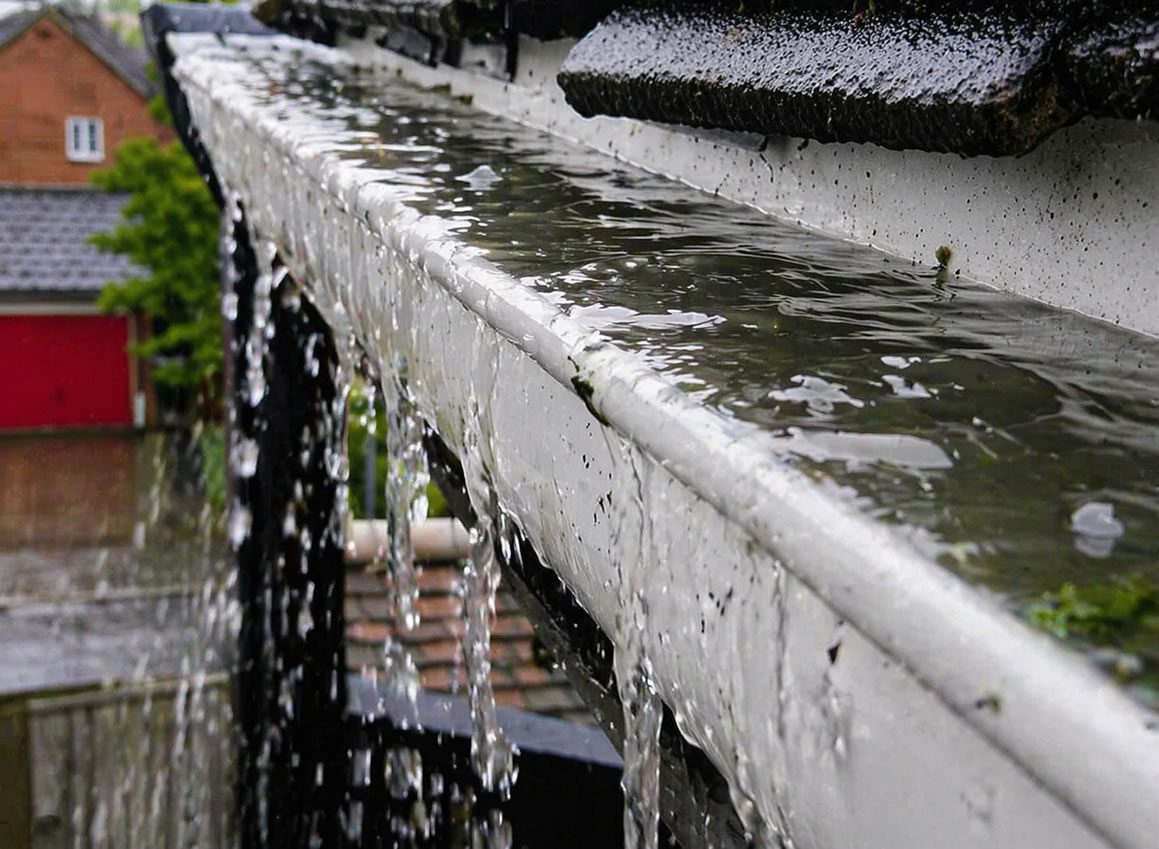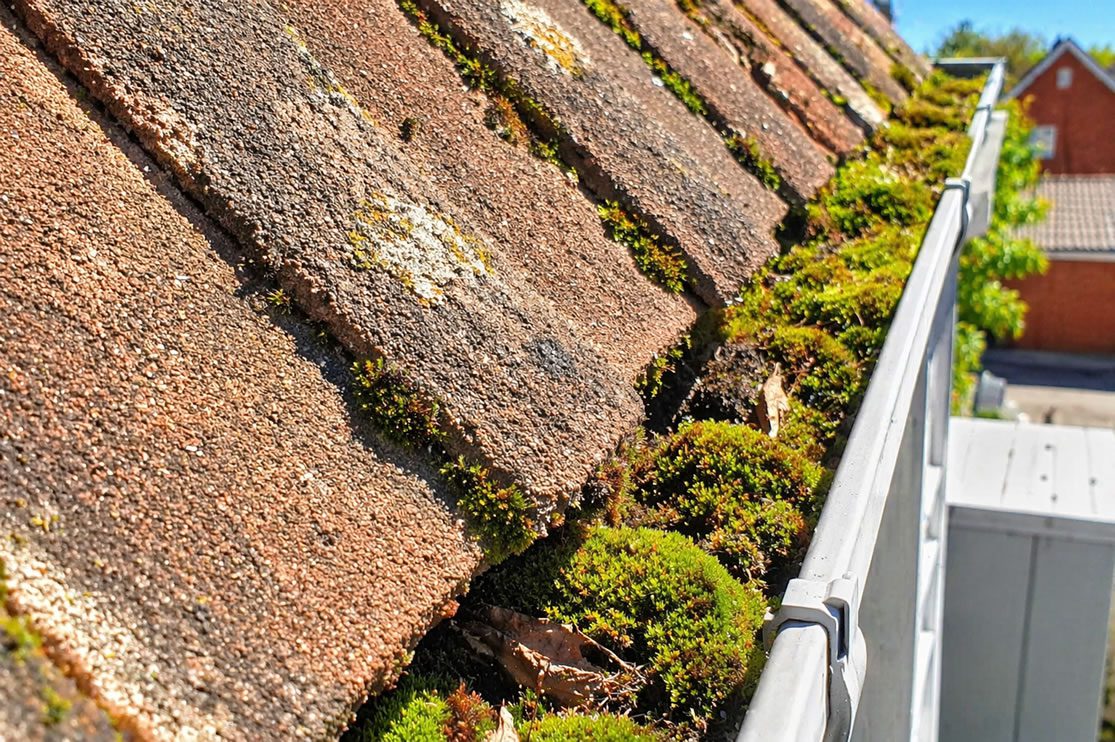


If you are asking how often gutters should be cleaned in the UK, the best general answer for most homes is twice a year. In practical terms, that usually means one gutter clean in spring and another in autumn. Recent UK guidance from multiple trade and maintenance sources repeats that pattern consistently, especially because British homes deal with a mix of winter debris, frequent rainfall, autumn leaf fall and roof moss washing into the guttering.
That said, not every property needs the exact same gutter cleaning schedule. A small bungalow in an open area may cope well with less frequent cleaning than a detached house under large trees. A home with heavy roof moss may need more attention than one with a cleaner roof surface. And a landlord or homeowner who has already had issues with blocked downpipes, overflowing gutters or damp patches may not want to wait a full year between cleans.
In this guide, we explain how often gutters should usually be cleaned in the UK, what changes that schedule, what is a gutters service, when the best times of year are, and how to tell if your home needs more frequent maintenance.
The General Rule: Twice a Year
For many UK homes, the most sensible gutter cleaning routine is:
- once in spring
- once in autumn
This is the schedule most commonly recommended in current UK gutter-cleaning and maintenance content. Spring cleaning helps remove debris left by winter storms, while autumn cleaning clears leaves and seasonal build-up before wetter and colder weather sets in.
Some UK sources still describe once a year as the minimum or a workable baseline for lower-risk properties, especially those without nearby trees. However, the more up-to-date and more widely repeated recommendation is that twice-yearly cleaning is better for the average UK home.
Why Twice a Year Makes Sense in the UK
The UK climate is one of the main reasons gutter cleaning matters. Gutters do not just collect autumn leaves. They also deal with:
- debris from winter winds and storms
- moss washing down from roofs
- blossom and seeds in spring
- frequent rainfall throughout much of the year
- twigs, silt and general roofline debris
Because of that, blocked gutters can develop more quickly than homeowners expect. Recent UK guidance notes that six-monthly maintenance is a strong benchmark, and the NRLA recently published partner guidance stating gutters should be cleaned and maintained every six months.
When Once a Year May Be Enough
Some lower-risk properties may be fine with annual gutter cleaning, particularly if:
- the property is not near trees
- the roof sheds very little moss
- there is no history of overflow or blocked downpipes
- the gutters are modern and in good alignment
- the area is not especially exposed to wind-blown debris
A few UK sources still describe annual cleaning as a general rule or minimum for some homes. That can be reasonable as a lower-end schedule, but it is safer to think of it as the minimum rather than the ideal in many UK settings.
When Gutters Should Be Cleaned More Often
For many homes, twice a year is not quite enough. More frequent cleaning may be needed if your property falls into one of the categories below.
Homes Near Trees
If your home is close to large deciduous trees, conifers or dense hedging, gutters can fill up much faster. Recent UK guidance suggests that homes in tree-heavy areas may need cleaning quarterly or at least checking every few months.
A practical schedule for homes near trees may be:
| Property setting | Suggested cleaning frequency |
|---|---|
| Open area, few trees | Once or twice a year |
| Some nearby trees | Twice a year |
| Heavy tree cover / leafy area | 3 to 4 times a year |
| Conifers / pine needles / seed-heavy trees | Every 3 months or regular inspections |
This reflects the current UK pattern in recent guidance that tree-dense properties usually need more than the standard schedule.

Homes with Roof Moss
Roof moss is one of the biggest reasons gutters keep blocking. Moss often breaks away from the roof and collects in the guttering, where it compacts with rainwater and dirt. If your roof sheds moss heavily, gutters may need checking or cleaning more than twice a year. Recent UK advice specifically notes that homes with heavy roof moss may need three to four cleans annually.
Properties With Previous Overflow Problems
If you have already had:
- overflowing gutters
- blocked downpipes
- water streaking down walls
- damp patches near roofline areas
- sagging gutters from standing water
then a more regular maintenance plan is usually sensible. Once a problem has already happened, waiting a full year is often too long. This is an inference based on the maintenance recommendations and warning signs listed across recent UK gutter-cleaning guidance.
Rental Properties and Landlord Maintenance
For rental properties, a documented maintenance routine can also be useful from a property-management point of view. The NRLA recently published guidance saying gutters should be cleaned and maintained every six months. That makes twice yearly a particularly sensible schedule for landlords who want to show reasonable upkeep.
Best Times of Year to Clean Gutters
The most useful times for many UK homes are:
Spring
A spring gutter clean helps remove debris left by winter weather and gets the guttering ready for spring and summer rain. This timing appears repeatedly in recent UK advice.
Autumn
Autumn is one of the most important times to clean gutters because of falling leaves and seasonal debris. If you only clean once a year, autumn is often treated as the most valuable time to do it.
Additional Summer or Winter Checks
Some homes also benefit from a quick visual inspection in summer or after major storms. In more exposed areas, or after periods of high winds and heavy rain, extra checks can help spot new blockages early. Recent UK sources suggest monthly checks during heavy storm seasons or more frequent inspections for higher-risk properties.
Seasonal Gutter Cleaning Schedule
Here is a practical guide for UK homeowners:
| Time of year | What to check for | Typical action |
|---|---|---|
| Early spring | Winter debris, loose moss, storm wash-down | Full clean if due |
| Late summer | Early moss build-up, seed debris | Visual check |
| Autumn | Fallen leaves, twigs, blocked outlets | Full clean |
| After major storms | Sudden blockages, overflowing sections | Inspection or extra clean |
This schedule is based on the seasonal pattern described across recent UK guidance and service pages.
Signs Your Gutters Need Cleaning Sooner
Even if you already have a schedule, gutters sometimes need attention earlier. Signs that cleaning is overdue include:
- water overflowing during rainfall
- plants or moss visible in the guttering
- downpipes draining slowly
- water marks on external walls
- damp patches near upper walls
- sagging gutter sections
- visible debris at the outlet
- birds or pests nesting around the roofline
Recent UK guidance repeatedly highlights overflowing water, plant growth and damp staining as common warning signs.
How Property Type Affects Frequency
Different homes can need different cleaning schedules.
Bungalows
Bungalows are easier to access, but they still collect leaves and moss. Frequency depends more on surroundings than height.
Terraced Houses
Terraced houses may have simpler gutter runs, but rear access can be awkward and debris can still collect just as quickly.
Semi-Detached Homes
Semis often suit a twice-yearly schedule unless there are large nearby trees or a moss-heavy roof.
Detached Houses
Detached homes often have more guttering overall, more corners and more downpipes, so they can need more regular attention.
Homes With Conservatories or Extensions
These properties may be harder to inspect casually, which means blockages can go unnoticed for longer. In those cases, regular planned cleaning becomes more valuable. This is a practical inference from the role access plays in inspection and maintenance.
How Roof Moss Changes the Schedule
If your gutters keep blocking even after they have been cleaned, the underlying issue may be the roof rather than the guttering itself. Several recent UK sources note that properties with heavy roof moss may need three to four cleans a year, because moss repeatedly falls into the guttering after rain and wind.
In that situation, it may be worth thinking about:
- more frequent gutter cleaning
- checking downpipes more often
- whether roof cleaning is needed
- setting up a maintenance plan rather than waiting for overflow
Is It Better to Book Regular Maintenance?
For many homeowners, yes. A planned schedule often works better than waiting until water pours over the side of the gutter. Recent UK maintenance guidance increasingly frames gutter cleaning as preventative care rather than just a reactive job.
Regular maintenance may be especially helpful if:
- your property is near trees
- you have had previous overflow issues
- your roof sheds moss
- you own a rental property
- you want to reduce the risk of bigger repairs later
Should You Clean Gutters Yourself or Book a Professional?
Light checks from the ground are useful, but many gutter-cleaning sources warn against risky DIY work at height. Multi-storey homes, awkward access and wet conditions all increase risk. For many households, booking a professional clean once or twice a year is the safer option. This is consistent with the repeated emphasis across UK guidance on safe access and proper maintenance, especially for taller or more complex homes.
Final Answer: How Often Should Gutters Be Cleaned in the UK?
For most homes in the UK, gutters should be cleaned twice a year, usually in spring and autumn. Homes near trees, in leafy areas, or with heavy roof moss may need three to four cleans a year or at least more frequent inspections. Lower-risk homes may get by with annual cleaning, but that is better seen as the minimum rather than the strongest default.
If your gutters have already started overflowing, showing plant growth or causing damp marks on walls, then the best time to clean them is not “later in the year” but now.
Frequently Asked Questions
How often should most gutters be cleaned in the UK?
For many UK homes, the best default is twice a year, usually in spring and autumn. This is the most commonly repeated recommendation across recent UK guidance.
Is once a year enough for gutter cleaning?
Sometimes, yes, for lower-risk homes with few nearby trees and no history of blockage. However, several recent UK sources suggest that twice-yearly cleaning is the stronger general recommendation, with annual cleaning better seen as the minimum.
How often should gutters be cleaned if you live near trees?
Homes near trees often need gutters cleaned every 3 to 4 months or at least checked more regularly, because leaves, twigs and seed debris build up faster.
Do mossy roofs mean gutters need cleaning more often?
Yes. Several recent UK sources say homes with heavy roof moss may need three to four cleans a year, because moss repeatedly falls into the guttering and blocks it.
What time of year is best for gutter cleaning?
For most homes, spring and autumn are the best times. Autumn helps remove fallen leaves, while spring clears winter debris and storm wash-down.
How do I know if my gutters need cleaning sooner?
Warning signs include overflowing water, moss or plants visible in the gutters, blocked downpipes, damp patches on walls and sagging gutter runs.
Should landlords clean gutters more regularly?
A planned schedule is sensible for landlords. Recent NRLA partner guidance states gutters should be cleaned and maintained every six months, which supports a twice-yearly routine for rental properties.
Is regular gutter cleaning cheaper than waiting for repairs?
Usually, yes. Preventative cleaning is normally cheaper than dealing with water damage, damp, leaking joints or damaged roofline components later. This is a practical inference supported by maintenance-focused UK guidance.