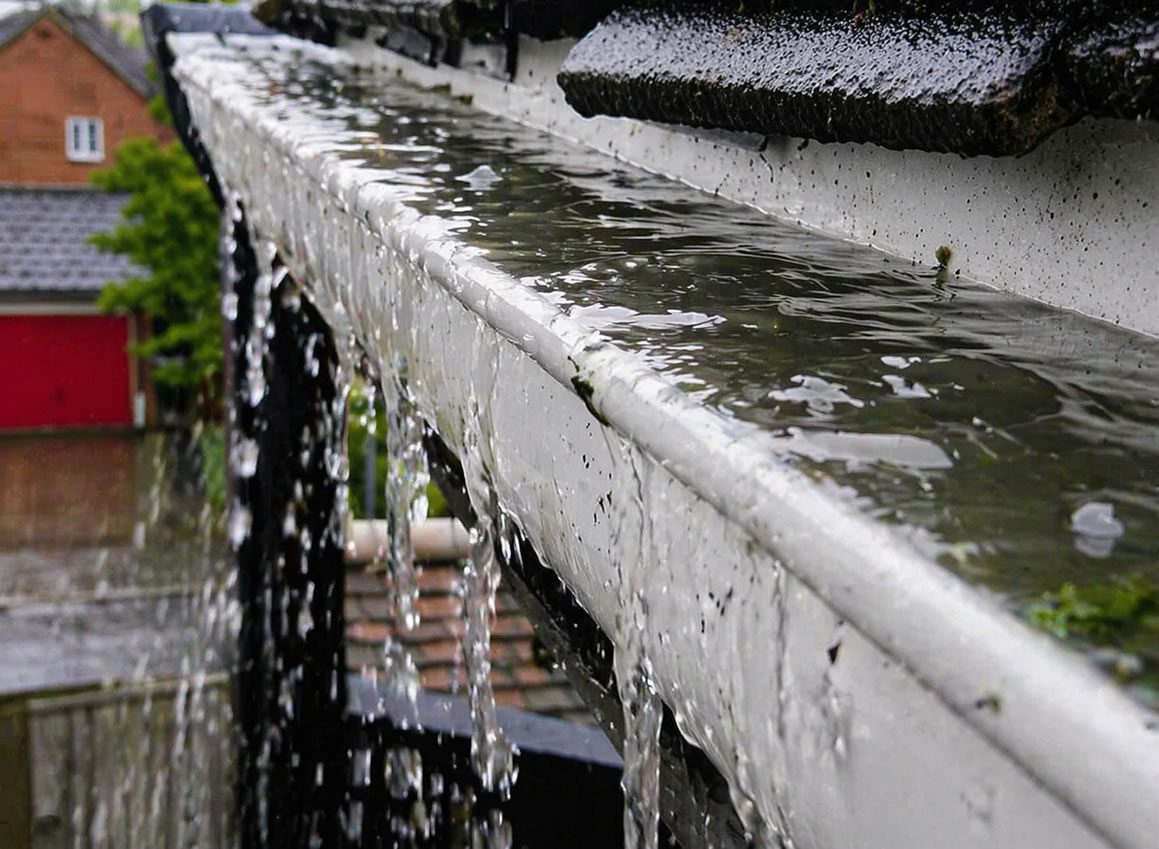

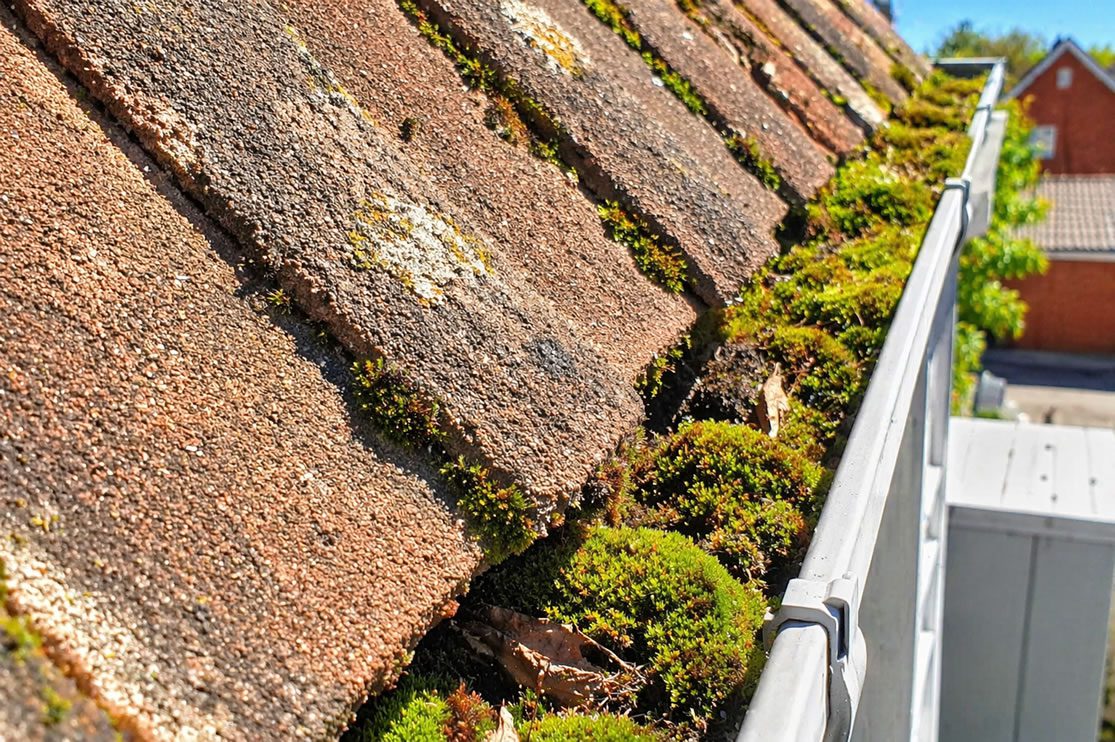
If your gutters keep overflowing even after rain seems fairly normal, there is a good chance the real problem is not just leaves in the guttering. On many UK homes, roof moss is a major cause of blocked gutters, blocked downpipes and repeat overflow problems. Recent UK guidance and service articles repeatedly point to moss breaking away from roof tiles during rain or wind, dropping into the guttering, and building up into thick blockages that stop water draining properly.
That matters because overflowing gutters are rarely just a cosmetic issue. Once water starts spilling over the front edge or backing up at the downpipe outlet, it can run down walls, soak roofline components and create damp-related problems around the property. UK sources consistently warn that blocked guttering can contribute to damp, wall staining and wider water damage if it is left too long.
This guide explains why roof moss ends up in gutters, why the overflow keeps coming back, what warning signs to watch for and what homeowners can do to reduce the problem.
Why Roof Moss Causes Blocked Gutters
Moss thrives on many UK roofs because the climate is damp, cool and often shady. Over time, it builds up on tiles, especially on older roofs and north-facing slopes. The problem starts when that moss loosens during wind, rain or frost cycles and drops into the gutter channel below. Multiple UK sources describe this same pattern: moss breaks away from the roof, lands in the guttering and then blocks water flow.
Once inside the gutter, moss becomes even more troublesome because it does not behave like a few dry leaves. Wet moss is heavy, compact and able to trap more debris around it. One UK source notes that moss in gutters can become very heavy when wet and may even contribute to the gutter pulling away from the fascia.
Why Your Gutters Keep Overflowing
Homeowners often clean the visible debris out of the gutter and assume the issue is solved, only for the overflow to return after the next stretch of bad weather. That usually happens for one of three reasons.
1. More Moss Keeps Falling from the Roof
If the roof is still heavily covered in moss, the guttering can refill quite quickly. Recent UK guidance explains that over time moss and debris from the roof continue to accumulate and fall into the gutters, which leads to repeat blockages and repeated overflow.
2. The Downpipe Outlet Gets Clogged
The outlet where the gutter feeds into the downpipe is often where moss collects and compacts. UK overflow guidance notes that if water pours over the front edge or bubbles near the outlet, a blockage at the outlet or inside the downpipe is likely.
3. The Guttering Has Started Suffering Secondary Problems
Sometimes moss starts the problem, but then the extra weight and standing water contribute to sagging, poor fall, loose brackets or leaking joints. Current overflow guidance lists incorrect fall, sagging or misaligned brackets and failed joints as additional causes of persistent overflow once a blockage problem has existed for a while.
How Moss Builds Up Into a Bigger Problem
A lot of gutter issues begin as light debris and gradually become more serious. Roof moss often follows this pattern:
- Moss grows on the roof.
- Rain and wind loosen pieces of moss.
- Moss drops into the gutters.
- The gutter traps more debris around it.
- Water flow slows or stops.
- The gutter overflows.
- Water starts affecting walls, fascias, soffits or ground-level areas.
Recent UK pages on blocked gutters and mossy roofs describe exactly this chain of events, especially where roof moss and downpipe clogs combine.
Signs Roof Moss Is Behind the Problem
If you are trying to work out whether roof moss is the reason your gutters keep overflowing, these are the signs most worth looking for.
Visible Moss on the Roof
If your roof has obvious green moss growth, especially in patches or along lower tile edges, there is a strong chance some of it is washing into the guttering during bad weather. UK roof-cleaning guides explicitly link visible roof moss with blocked gutters and drainage issues below.
Gutters Fill Up Again Soon After Cleaning
If the gutters have been cleaned but quickly start overflowing again, recurring roof moss is a likely cause. This is a reasonable inference supported by UK sources describing ongoing moss fall from roofs into gutters over time.
Overflow Happens Even Without Heavy Leaf Fall
Some homes are not near many trees, yet the gutters still block. One recent UK article specifically points out that even “tree-free” gutters can still fill up because of roof moss and other roof-derived debris.
Downpipes Keep Blocking
Moss fragments can travel down to the outlet and downpipe, where they combine with dirt and other debris to form stubborn blockages. UK roof-cleaning and drainage pages note that moss fragments can impede downpipes and cause overflow onto walls, foundations or soffits.
What Problems Can Overflowing Gutters Cause?
Overflowing gutters can do more than make a mess in heavy rain. UK sources repeatedly warn that blocked gutters can lead to dampness in the home, stained external walls, roofline damage and moisture issues around the property.
Common consequences include:
- water running down exterior walls
- damp patches and staining
- stress on gutter brackets and joints
- water reaching fascias and soffits
- pooling near the base of the house
- repeat blockage and maintenance, gutter cleaning costs
One recent UK guide even describes blocked guttering as a leading cause of dampness in the home.
Why Cleaning the Gutters Alone Is Not Always Enough
If the roof is still dropping moss, a simple gutter clean may only solve the problem temporarily. A recent UK article makes this point directly by explaining why cleaning the roof and gutters together often makes more sense: moss and debris from the roof continue to accumulate in the gutter system otherwise.
That does not mean every mossy roof needs immediate full roof cleaning. But it does mean homeowners should think about the source of the blockage, not just the place where the water is backing up.
Should You Clean the Roof and Gutters Together?
In many cases, yes. If roof moss is clearly feeding the blockage problem, cleaning only the gutters may leave the main cause untouched. Current UK roof and gutter articles suggest that combining roof and gutter cleaning can help reduce repeat blockages and ongoing overflow issues.
A combined approach may make particular sense if:
- the roof has visible moss
- gutters refill quickly after cleaning
- downpipes keep clogging
- overflow has happened more than once
- water is already staining walls or affecting the roofline
How Often Should Mossy Roofs and Gutters Be Checked?
Regular checking is important because moss-related problems tend to return. Recent overflow guidance recommends cleaning gutters at least twice a year, usually in spring and autumn, and more often if debris is building up quickly.
For homes with obvious roof moss, more frequent inspections may be sensible, especially after storms or prolonged wet weather. That is an inference based on the repeated advice that mossy roofs and recurring blockages need closer attention.
How to Reduce Repeat Overflow Problems
Homeowners can usually reduce repeat gutter overflow by focusing on prevention as well as cleaning.
Keep Gutters Cleared Regularly
Twice-yearly cleaning is a common minimum benchmark in current UK guidance, with more frequent maintenance for higher-risk homes.
Deal With Roof Moss Before It Becomes Heavy
Several UK sources warn that moss traps moisture, can contribute to tile damage and regularly falls into guttering, causing repeat blockage.
Check Downpipes as Well as Gutters
A gutter can look partly clear but still overflow if the downpipe or outlet is clogged. Current overflow guidance makes this clear.
Inspect After Heavy Rain or Wind
Storms often dislodge moss and debris. Recent UK content on blocked gutters and maintenance repeatedly points to bad weather as a trigger for sudden blockages.
Final Thoughts
If your gutters keep overflowing, roof moss may be the hidden reason the problem will not stay fixed. Across recent UK guidance, the pattern is consistent: moss grows on the roof, breaks away into the guttering, blocks water flow and causes repeated overflow, damp and roofline issues if it is ignored.
That is why it is often worth thinking about roof moss and blocked gutters as one connected problem, not two separate jobs. Cleaning the gutters matters, but if the roof is still dropping moss into them, the overflow is likely to return.
Frequently Asked Questions
Can roof moss really cause gutters to overflow?
Yes. Recent UK sources repeatedly explain that moss can break away from the roof, fall into the gutters and block water flow, which leads to overflow.
Why do my gutters block even though there are no trees nearby?
Because leaves are not the only cause of blocked gutters. One recent UK article specifically notes that roof moss and roof-derived debris can block gutters even on properties without nearby trees.
Can moss block downpipes as well as gutters?
Yes. UK roof-cleaning and overflow guidance notes that moss fragments can clog outlets and downpipes, which then causes water to back up and overflow.
Should I clean the roof and gutters at the same time?
Often, yes. A recent UK article explains that cleaning roof and gutters together can make sense because moss and debris from the roof can quickly refill the gutters.
How often should gutters be cleaned if roof moss is a problem?
Current UK guidance commonly recommends at least twice-yearly gutter cleaning, with more frequent checks or cleaning for properties that suffer repeated moss-related blockages.
Can roof moss damage more than just the gutters?
Yes. Recent UK sources note that moss can trap moisture on the roof, contribute to tile problems and, once it blocks gutters, increase the risk of overflow-related water damage to walls and roofline areas.
What are the signs that roof moss is causing the blockage?
Good clues include visible moss on the roof, gutters that refill soon after cleaning, repeated overflow in rain and downpipes that keep clogging. These are supported by the pattern described in recent UK roof and gutter articles.
Is cleaning the gutters enough to stop the problem?
Not always. If the roof is still shedding moss, the gutters may keep blocking again. That is why addressing both the guttering and the roof source is often the better long-term solution.